
Timber Frame Joinery

Traditional connections that hold a frame together — without relying on metal.

Built to Last

Timber framing is defined by how timbers connect. Instead of nails and brackets, we cut precise joints that lock together and are secured with wooden pegs — creating structures that carry load, resist movement, and age with character.

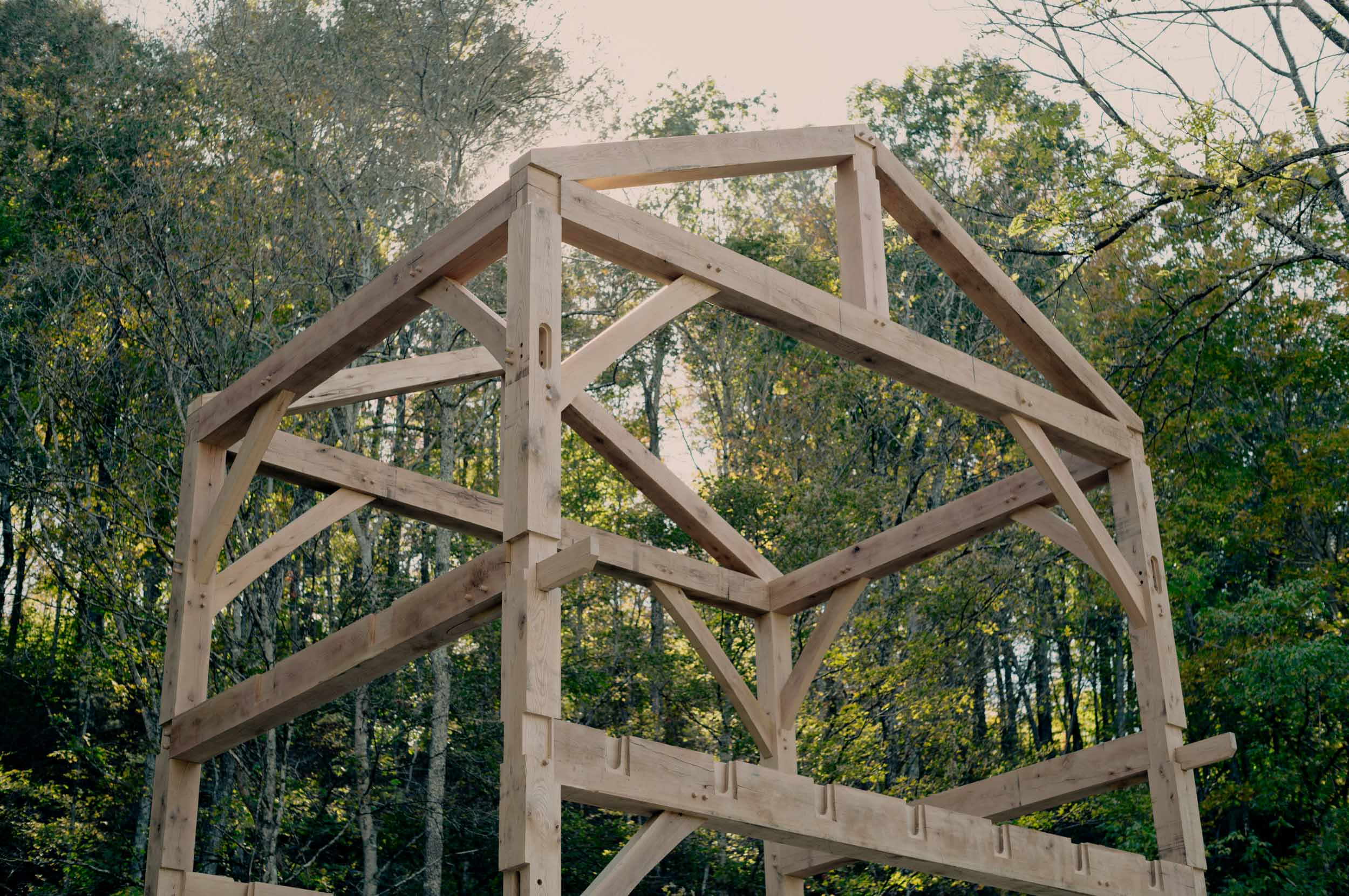
Timber frame structure showing mortise and tenon joinery with knee braces

Why Joinery Matters

Every timber in a frame does a job. Joinery transfers forces from beam to post, brace to girt, rafter to ridge — so the building stands square and strong for decades. Good joinery is invisible when done right, but it is the heart of the craft.

Mortise & Tenon

The classic timber frame joint. A tenon (tongue) cut on the end of one timber fits into a mortise (slot) in another. Once seated, the connection resists rotation and pull — the backbone of posts, beams, and plates throughout the frame.

Wooden Pegs (Trunnels)

After joints are fitted, tapered hardwood pegs are driven through offset holes to draw the connection tight and keep it from slipping. No metal required — just wood on wood, swelling and gripping over time to lock the joint in place.

Knee Braces

Short diagonal timbers pinned between posts and beams prevent racking — the sideways sway that can distort a frame. Braces turn a rectangle into a rigid triangle, adding stability where the structure needs it most.

Scarf Joints

When a timber needs to span farther than a single log allows, scarf joints splice two members end-to-end with interlocking cuts. Properly laid out and pegged, a scarf joint is as strong as the timber around it.

Dovetail & Housing Joints

Used where joists or purlins meet beams, these joints capture the member so it cannot pull away. The angled dovetail or stepped housing locks the timber in place while keeping the floor or roof system aligned.